Thursday, March 24, 2011

Ciao, Professore! Pt. 1

I'm really enjoying this movie. The children are hilarious with their grown-up attitudes, swears and livelihoods. There is always chaos in and out of the classroom until the professor accidentally hits a student.  He finds out that the only way to get their respect is through physical abuse, but he is not willing to use that method because it is shameful. Still, the next day he apologizes and they still listen to him; they are still being respectful. They were even waiting in class for him to arrive. After that day of class the professor decides to stay in Corzano to help these kids.


Corzano is a twisted place. The adults are all corrupt, and useless. They have children, but then lay around too drunk all day to take care of them. So instead, the children have to grow up early to take care of their siblings and even work for their family illegally. These children have no childhoods. And even worse, the adults don't care about what the children are missing out on by becoming adults right away. They don't receive an education. They will end up just like there parents; washed up.

The professor automatically sees 100 things wrong with the school system, let alone Corzano. He wants to make changes for the better, but Mimi and the principal don't want anything to change. They scold the professor every day for his nerve, complaining about their system. Mimi and the principal don't care about the needs of the children, only about themselves. I'm sure some great changes will happen by the end of the movie, I can't wait to find out!

The Gomorrah

I wrote my blog, but never posted it - Oops!

The realism of this movie truly impressed me. I was completely blown away. As many others pointed out, this film focuses on the parts of Italy tourists don't go to. The parts that aren't in the movies, aren't on post-cards, etc... This part of Italy needs money to go into the community, to the people. It needs reform and uncorrupt authority. The people living there are stuck. The Mafia is in charge, and if someone owes them something they aren't allowed to leave. But, even if your debt is complete, there is always something else they will keep you around for. There is no getting out and so this poor community will never grow. The mafia has all the money and power, and they don't care about what the people need. This is depressing. When most people think about italy they think about famous ruins, great food, festivals, art, music, etc... No one thinks about some of the needs Italy has, it's mostly seen as a get-a-way vacation spot.

Wednesday, March 2, 2011

The Leopard

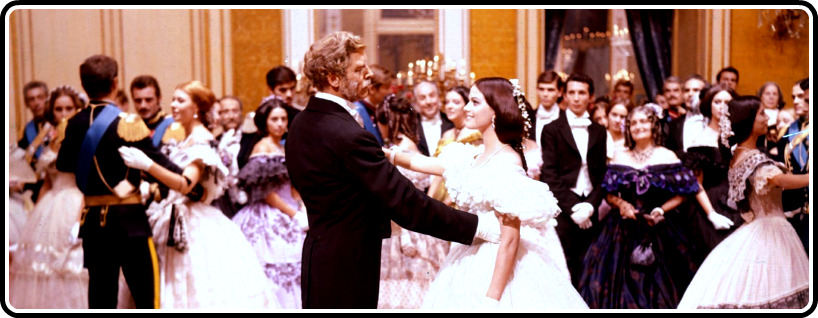
It was hard to get into this film, but once I did I truly enjoyed it. The pacing, plot line, and structure was not traditional to narrative storytelling, which made things seem very slow. But once I realized that intentions of the film it made sense. It seems to me that besides the Prince and the political struggles of the time, the most important aspect to show the audience is how the people lived. I love period piece films, and this is one of the best ones I've ever seen. The whole movie had realistic costumes, props, locations, etc... I was very impressed with the ballroom scene. It lasted a very long time, but it was beautiful. There were so many extra scenes of dancing, crowds of people talking, intimate couples, eating, drinking and more. I feel like nothing was left out. The party lasted until dawn, and I can imagine everything that happened because of all the details included. 

Overall, the art direction of the film was fantastic. All the shot choices and locations were amazing. Each shot had so much depth and texture to it. Once again I'm impressed by the beauty of this film and how much effort went into it. There are many times where the emphasis is put on the location. The film was established well with the beginning sequence of homes and countryside. Also there are many landscape shots and views of the residential area of Sicily. It seems to give a constant reminder about the people who are living there. It reminds of what the Prince said. He said that the people of Sicily are asleep, inactive. That nothing will change unless they want the change. During all the landscape and residential shots, the land seems so calm and serene; almost like the whole area is asleep. 

It also reminds me of Roman holiday in that it made Sicily seem like a dream vacation and a wonderful place to go to. Though it was unstable at first, it ends in a state of happiness and rebirth, symbolized by the new engage couple Angelica and TanCredi (spelling?). 

It was very long, but I think it was worth the watch! 

Monday, February 14, 2011

Pane e Tulipani

I saw this movie before, and it was just as enjoyable for the second viewing. 

I feel this movie is about love, but more importantly self-love. Rosalba had to learn how to love herself; how to become a confident, independent woman. With her husband she wasn't appreciated, and she wasn't challenged in her every-day life. As soon as she was left, and decided to hitch a way to Venice, life was put back into her body. She finally had meaning, excitement and motivation for her day other than doing everything her family wants. 
During this accidental vacation, Rosalba received a chance to learn what she wants in life. She basically learns that her old life was suppressing her needs and wants. In her marriage, she was being suffocated; she had no voice. Once she starts working at the flower shop and making her own connections in Venice, she realizes that she can make her own decisions. And that she can also be successful on her own. She doesn't need her rude, unfaithful husband. 

One of my favorite moments is when her husband asks his mistress to iron some of his shirts. Her reaction was something like, "I'm not your wife!" It's funny how when separated, he finds out how much he needs her, and she finds out how much she doesn't need him. 

She ends up becoming happy on her own, though she does miss her children and feels guilty for leaving them. But she also ends up falling or Fernando and re-kindling her love of the accordion. 

All in all, Rosalba completes her character development, and it's very rewarding to see such  happy ending where she gets everything she deserves. Love, family, happiness and self-worth. 

Monday, February 7, 2011

Caterina va in Citta

What stuck with me the most after viewing this film is all the different family dynamics represented. Caterina's parents for starters. Her mother, Agata, is a housewife, who does mindless work all day and does whatever her husband tells her to do. She has no voice for herself, no dignity. She's fed up with the lack of love she gets from her husband, and by the end of the movie we find out she's having an affair. Caterinas' father, Giancarlo, is the complete opposite. He comes on too strongly to everyone. He forces his opinions on his family and peers, and he takes all of his anger out of his wife. He also uses connections Caterina makes in school to try and move along his career as a writer. All in all, he's not the ideal role-model or father.
The friends Caterina makes at school have just as dysfunctional families. Daniela is the daughter of a right-wing politician father, and Margherita is the daughter of very liberal writers. In Daniela's home her father is absent most of the time, and her mother is unaware of her whereabouts or what she does when she goes out. It seems like Daniela's car driver and body guard is her only parental figure, which isn't saying much since she's constantly flirting with him. In Margherita's home, she has parents that care, but she is rebelling against them. Her parents also aren't very strict, which ends up effecting Caterina negatively. Margherita tattoos Caterina's arm in her very room! When Giancarlo finds out he was furious at her parents, but they did nothing to reprimand Margherita. Also, Caterina skips school for the first time because of Margherita, who wanted to visit a grave site.
Last, there is Caterina's crush, Edward( I think that was his name). His parents are divorced, which caused him to move to Rome all the way from Australia. His mother was very pleasant, and his relationship with her seemed fine, but something was strange in the way he spent most of his time in his room, alone. Also, how he liked to watch people out his window. It didn't seem very healthy. But, by the end of the movie he is moving back to Australia because his parents are trying it out again, as he says.
When Caterina's father leaves, it seemed like her mom and her will be better off. Giancarlo brought anger and hate into their lives. When he left, Agata seemed to be free and happy. That says a lot for the conventions of marriage. If people get married and become truly unhappy it probably is best to end things, instead of staying together for the sake of the children. A loveless marriage, according to this film, will only cause drama and frustration for the family instead of a happy home to grow up in. It's hard enough for Caterina to figure out her identity on her own, never mind when her father is always bullying her and Agata.

Friday, February 4, 2011

La Dolce Vita

1. I agree that this film strays from normal storytelling and character development. The characters are thrown into the mix, not properly identified. As the audience we don't know what many of the characters do, who they are, what their motive or desires are. And without that knowledge, it's difficult to connect to the characters or understand how they are changing throughout the film. There are some exceptions, but generally that is the case. Also, the way the passage of time is dealt with in this movie is very different from most. Instead of gradually changing from night to day, this movie tends to finish a night scene and go right into a day scene. It throws the audience off balance, keeping us on our toes because we never know where the next scene will take us.

2. I feel that one of the underlying themes of this movie is everything looks better from the outside looking in, or the "grass is always greener..." phrase. This is strongly emphasized by the near constant presence of the paparazzi. The paparazzi represents modern culture idolizing celebrities and famous people. They try so hard to capture a part of their lives because it seems to be so much better, it seems to be the perfect life. When in reality no ones life is perfect. None of the characters are without problems.

3. I really enjoyed the scene at Steiner's house. It may not seem like an essential part, but I believe it is. Steiner tells Emma that she needs to love Marcello more than he loves himself in order to be happy. Then Emma tries to hint at marriage to Marcello, which was unsuccessful. Steiner admits that he chose the comfortable life, becoming respectable, but not a professional. He feels like he took the safe road. And Marcello admits that he needs to change his life, that something has to give in order for him to be happy and find his passion (not in so many words, but still). For these reasons and more, Steiner's house was very important. It is the first time in the film where the desires or motivations of the characters are explained. The shot list ranged from close-ups to medium, to wide shots. 3-shots, 2-shots were also used. I don't remember any camera movement though. I don't believe there was any use of dolly, tilts, pans, zooms etc... Though the camera work wasn't special, the staging and composition of each frame was. The party guests were all placed at varying heights, which placed a person at every level. The party group was strange and diverse enough, but then to scatter them around the room, some sitting, some standing. Some slouching, some standing with  firm back. It created a successful contrast between each person, creating depth, range and flavor to the shots.

Overall, I enjoyed this film. I got used to how the narrative was disconnected and the characters had to be eased into. I also feel that I would gain a lot more if I re-watched it.

Wednesday, January 26, 2011

Benvenuto!

What is the source of your interest in Italy?
My main interest in Italy comes from my family. My mother's side of the family is Italian. Unfortunately, the last person in the family that could speak the language was my great grandmother who recently passed away in 2009 after turning 100 years old.

Also, Italy is one of my top places to travel to if I ever get the chance.

What do you know about Italy?
I know a little about it's art, music, history, language and architecture. Also, I recently did a real estate project on areas in Toscana, which taught me a lot about how life is there.

How and where did you learn it?
I learned it from many history and art history courses. The real estate project I learned about in Intermediate Italian 1.

What would you like to learn more about Italy?
I love learning about art and culture. One of the best ways to do that, I believe, is through film.

What Italian films have you seen?
Pane e Tulipani, La Strada, The Battle of Algiers, Open City, Cinema Paradiso, The Bicycle Thief.